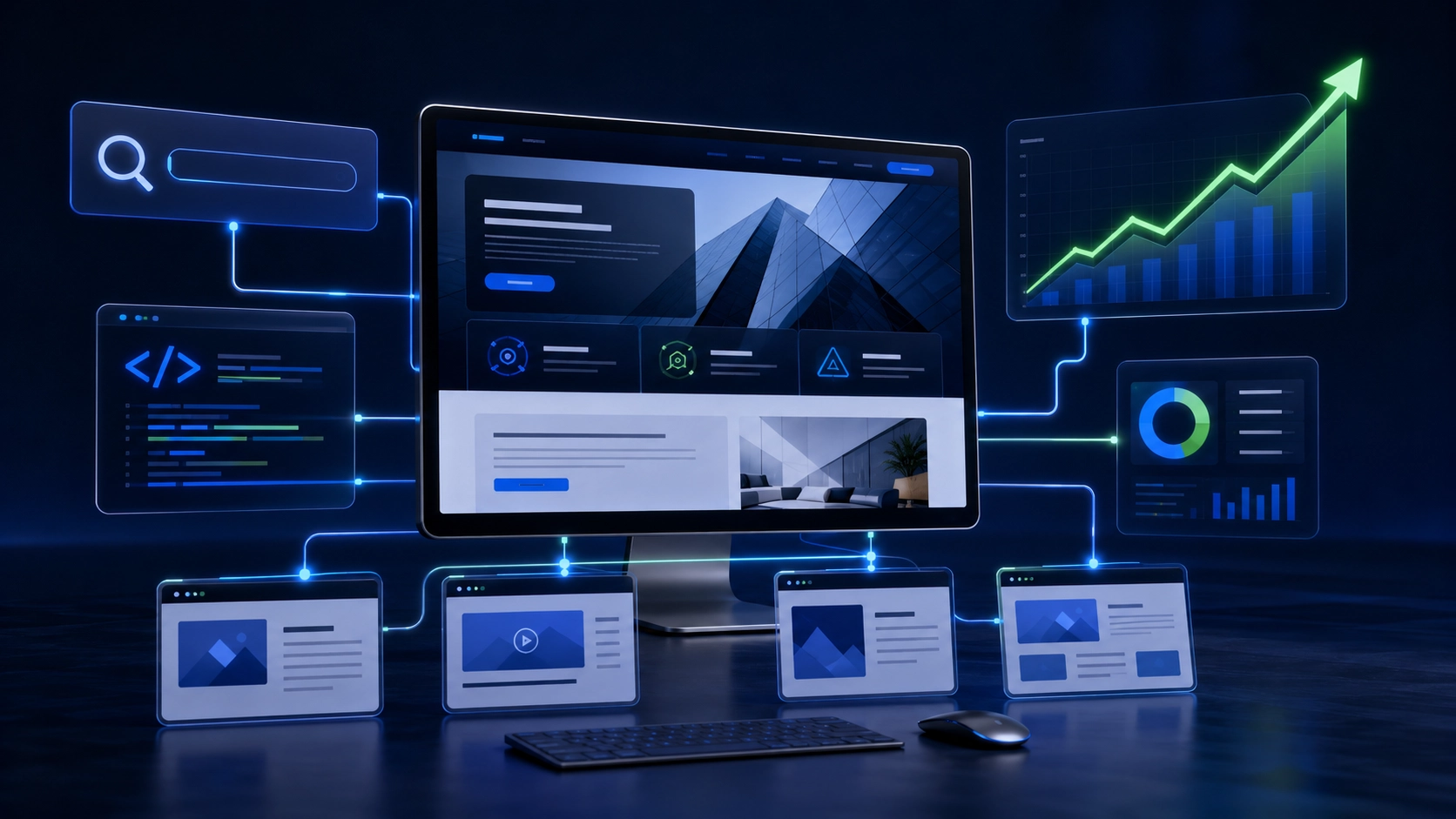
A great-looking website can make a strong first impression, but attractive design alone will not guarantee that people find it. At the same time, even the best SEO strategy can struggle when it is built on a website that is slow, confusing, difficult to navigate, or poorly developed.

SEO and web design are often treated as two separate services. In reality, they work best as part of the same strategy.

Your website’s design affects how visitors interact with your business, while its structure, content, performance, and development affect how search engines understand and rank it. When all of these elements work together, your website has a much better opportunity to generate visibility, traffic, leads, and long-term business growth.

Why Web Design Matters for SEO

Search engine optimization is not limited to adding keywords to a website. Google considers many different factors when determining which pages provide the most relevant and useful experience for a searcher.

Your website needs valuable content, but that content must also be easy to find, access, understand, and use. That is where professional web design and development become essential.

An SEO-friendly website should help search engines:

  • Faster website performance
  • Improved mobile responsiveness
  • Better search engine visibility
  • Higher conversion rates
  • Stronger brand positioning
  • Greater flexibility and scalability
  • Enhanced security and reliability

It should also help potential customers find information without unnecessary frustration.

Google’s ranking systems consider signals related to the overall page experience, including Core Web Vitals and mobile usability. Although no single design improvement guarantees higher rankings, a well-designed website creates a stronger foundation for SEO and a better experience for the people visiting it.
RDC Design Group SEO and Web Design Services Pennsylvania

Website Structure Helps Google Understand Your Business

Before the visual design of a website begins, its structure should be carefully planned.

Site structure determines how pages are organized, how users move through the website, and how search engines discover relationships between different types of content. A website with a clear hierarchy makes it easier for Google to determine which pages are most important and what services the company provides.

For example, a business may have a main services page supported by individual pages for web design, web development, SEO, PPC advertising, graphic design, and website maintenance. Each page can target a specific service while supporting the website’s broader authority.

This is significantly more effective than placing every service on one generic page with only a few sentences of content.

A strong website structure typically includes:

  • A clear main navigation
  • Dedicated pages for important services
  • Logical categories and subpages
  • Descriptive URLs
  • Relevant internal links
  • A well-organized footer
  • An accurate XML sitemap

Planning these elements during the web design process helps prevent SEO problems later. It also allows content, design, and development decisions to support the same search visibility goals from the beginning.


Mobile-Friendly Web Design Is Essential

Mobile design is no longer an optional feature. Google uses the mobile version of a website’s content for indexing and ranking, a system known as mobile-first indexing.

That means a website cannot simply look good on a desktop computer. It must also provide a complete and functional experience on smartphones and tablets.

Responsive web design allows the layout to adjust based on the visitor’s screen size. However, effective mobile design involves more than shrinking desktop content to fit a smaller screen.

A properly optimized mobile website should include:

  • Readable text without excessive zooming
  • Buttons that are easy to select
  • Simple, accessible navigation
  • Appropriately sized and optimized images
  • Forms that are easy to complete
  • Clear calls to action
  • Consistent content across mobile and desktop devices
  • Fast loading speeds on cellular connections

Mobile usability influences both search visibility and conversions. Even if a visitor finds your business through Google, a frustrating mobile experience can cause that person to leave before calling, completing a form, or learning more about your services.

Website Speed Connects SEO, Design, and Development

Website speed is one of the clearest examples of SEO and web design working together.

Large images, excessive animations, unnecessary plugins, poorly written code, and bloated page builders can make a website noticeably slower. These issues affect the visitor’s experience and can also weaken the technical foundation of an SEO campaign.

Google’s Core Web Vitals measure real-world aspects of the user experience, including loading performance, responsiveness, and visual stability. Google recommends achieving good Core Web Vitals for both search performance and user experience, although strong scores alone do not guarantee top rankings.

Website speed optimization may involve:

  • Properly sizing and compressing images
  • Serving images in modern file formats
  • Reducing unnecessary scripts
  • Limiting third-party resources
  • Improving server performance
  • Using browser caching
  • Removing outdated or redundant plugins
  • Optimizing CSS and JavaScript
  • Preventing unexpected layout movement

A professional web development company should consider performance throughout the project rather than attempting to repair a slow website after it has already launched.

Design Determines How People Engage With Your Content

SEO brings people to a website. Design helps determine what they do once they arrive.

A page may contain excellent information, but visitors are unlikely to read it when they are greeted by long, unbroken paragraphs, confusing layouts, distracting visuals, or unclear navigation. Good web design makes content easier to scan and understand.

Headings, imagery, spacing, typography, icons, lists, and calls to action all help organize information. These visual elements create a natural path through the page and help visitors quickly identify the information that matters most to them.

This is particularly important because different visitors arrive with different intentions. One person may be ready to request a quote, while another may still be comparing services or researching a problem. The page should make the next step clear for both audiences.

Strong content presentation can help visitors:

  • Understand the company’s services
  • Locate answers to common questions
  • Recognize the company’s experience
  • Review relevant examples of past work
  • Navigate to related services
  • Contact the business when they are ready

When people can use a website easily, they are more likely to remain engaged and take meaningful action.

SEO Content Should Influence the Website Design

Content should not be squeezed into a design after the layout is already complete. The design should be created around the information visitors need and the search terms the business wants to target.

SEO research can help determine:

  • Which services need dedicated pages
  • What questions potential customers are asking
  • Which geographic areas should be addressed
  • What supporting resources or blog posts should be created
  • How pages should be organized
  • Where calls to action should appear
  • Which information deserves greater visual emphasis

For example, a web design company in Pennsylvania may need individual content targeting custom web design, WordPress development, website maintenance, SEO, and related digital marketing services. Trying to optimize one page for every possible service makes it difficult to create a focused experience for users or search engines.

Keyword research should guide the subject and purpose of each page, but the content still needs to sound natural. Repeating exact phrases such as “SEO services Pennsylvania” throughout a page does not make the content more valuable. A better approach is to write clearly about SEO services in Pennsylvania while using closely related terms where they make sense.

This helps the website cover the topic thoroughly without sacrificing readability.

Internal Linking Strengthens the Entire Website

Internal links connect one page of your website to another. They help visitors continue exploring relevant information and help search engines discover and understand your content.

For example, a blog post discussing SEO-friendly web design may naturally link to pages about:

The words used within a link can also provide context about the destination page. Google explains that links help it discover new pages and understand their relevance, making crawlable internal links an important part of a search-friendly website structure.

Internal linking should be intentional. Adding dozens of unrelated links to every page can make the content distracting. The goal is to direct people toward genuinely useful information while reinforcing the relationships between your services, expertise, and resources.

Custom Web Development Supports Technical SEO

The way a website is developed can either support or restrict its organic search potential.

Search engines need to crawl, render, and index website content before that content can appear in search results. Broken links, duplicate pages, incorrect redirects, inaccessible navigation, blocked resources, and poorly implemented JavaScript can interfere with this process.

Technical SEO considerations during website development include:

  • Crawlable navigation and links
  • Proper heading structure
  • Unique title tags and meta descriptions
  • Canonical URLs
  • XML sitemaps
  • Redirect management
  • Structured data
  • Image alt text
  • Secure HTTPS connections
  • Mobile compatibility
  • Indexing controls
  • Error-page management

These features may not always be visible to the average visitor, but they can have a major influence on how effectively a website communicates with search engines.

Working with a custom web development company that understands SEO can reduce the risk of discovering serious technical issues after launch.

A Website Redesign Can Help SEO, but It Must Be Handled Carefully

Redesigning an outdated website can create opportunities to improve its speed, structure, content, usability, and conversion strategy. However, redesigns can also cause rankings to decline when SEO is not considered during the process.

Common website-redesign mistakes include:

  • Removing pages that currently receive organic traffic
  • Changing URLs without creating redirects
  • Reducing valuable page content
  • Accidentally blocking search engines
  • Removing title tags and metadata
  • Breaking internal links
  • Launching incomplete mobile layouts
  • Publishing duplicate or placeholder content
  • Failing to transfer analytics and tracking tools

Before redesigning a website, the existing site should be evaluated to identify its strongest pages, rankings, backlinks, and traffic sources. That information can then guide the new structure and help preserve the SEO value the website has already earned.

A redesigned website should not merely look newer. It should be more useful, more efficient, easier to navigate, and better equipped to support the company’s marketing goals.

SEO and Web Design Should Support Conversions, Not Just Rankings

Higher Google rankings are valuable, but rankings are not the final goal. The purpose of increasing search visibility is to connect the business with more potential customers.

A website that generates traffic without generating inquiries may have problems with its messaging, design, calls to action, credibility, or targeting.

Effective web design helps convert SEO traffic by clearly communicating:

  • What the business provides
  • Who it serves
  • Why customers should trust it
  • What makes its services different
  • What visitors should do next

Contact forms, phone numbers, quote requests, portfolio examples, testimonials, certifications, case studies, and service details should be placed where they help visitors make decisions.

When SEO and conversion-focused web design are developed together, the website can attract the right audience and provide a clear path from initial search to customer inquiry.

Why Businesses Benefit From One Integrated Strategy

When separate providers handle SEO, content, design, and development without collaborating, important opportunities can be missed.

The SEO team may recommend pages the design cannot easily accommodate. The designer may create layouts without enough room for valuable content. The developer may build features that create performance or crawling issues. Content may be written without considering how it will appear on different devices.

An integrated strategy allows every part of the website to support the same goals.

This is especially valuable for businesses working with a web design company in Pennsylvania that also provides SEO and digital marketing services. Instead of repairing conflicts between separate strategies, the website can be planned around visibility, usability, performance, and lead generation from the beginning.

Build a Website Designed to Be Found

SEO and web design are not competing priorities. They are two parts of the same online growth strategy.

SEO helps the right people discover your business. Web design and development shape what those people experience when they arrive. When your content, structure, technology, visual design, and conversion strategy work together, your website becomes a stronger marketing tool.

RDC Design Group combines custom web design, web development, WordPress development, content creation, and SEO services to build websites that look professional and perform with a purpose. Whether you are launching a new website, redesigning an outdated one, or looking for a Pennsylvania SEO agency to improve your current online visibility, our team can help create a strategy built around your business.

Contact RDC Design Group to learn how an integrated web design and SEO strategy can help improve your Google rankings, generate more qualified traffic, and turn your website into a more effective source of leads.