
A small business website is more than an online brochure. It is often the first place potential customers visit to learn about your business, explore your services, and decide whether to contact you.
A successful website should look professional, work well on every device, load quickly, and make it easy for visitors to take action. You do not need dozens of pages or complex features. Instead, focus on the right small business website essentials that build trust and turn visitors into customers.
Whether you are creating a new website or updating an existing one, this small business website checklist covers 10 essential elements that can help your website better support your business and your customers.
1. A Clear and Professional Homepage
Your homepage creates the first impression of your business. Visitors should be able to understand what you do, who you serve, and why they should choose you within a few seconds.
Use a clear headline that explains your service or value. Avoid vague statements that sound good but do not actually tell visitors what your business offers.
Your homepage call to action should also make the next step obvious, whether that means Get a Quote, Book a Consultation, or Contact Us Today.
Keep the design clean and focused. A well-organized homepage makes it easier for visitors to understand your business and find the information they need.
2. Simple Website Navigation
A small business website may use a simple menu with pages such as:
Good navigation helps visitors find information without confusion.
- Home
- About
- Services
- Reviews
- Blog
- Contact
Following website navigation best practices means using clear labels that visitors immediately understand. For example, “Services” is usually easier to understand than a creative phrase that makes users guess where the link will take them.
Simple navigation is also an important part of website user experience. When people can quickly find what they need, they are more likely to stay on your site, explore your services, and contact your business.
3. Mobile-Friendly Responsive Web Design
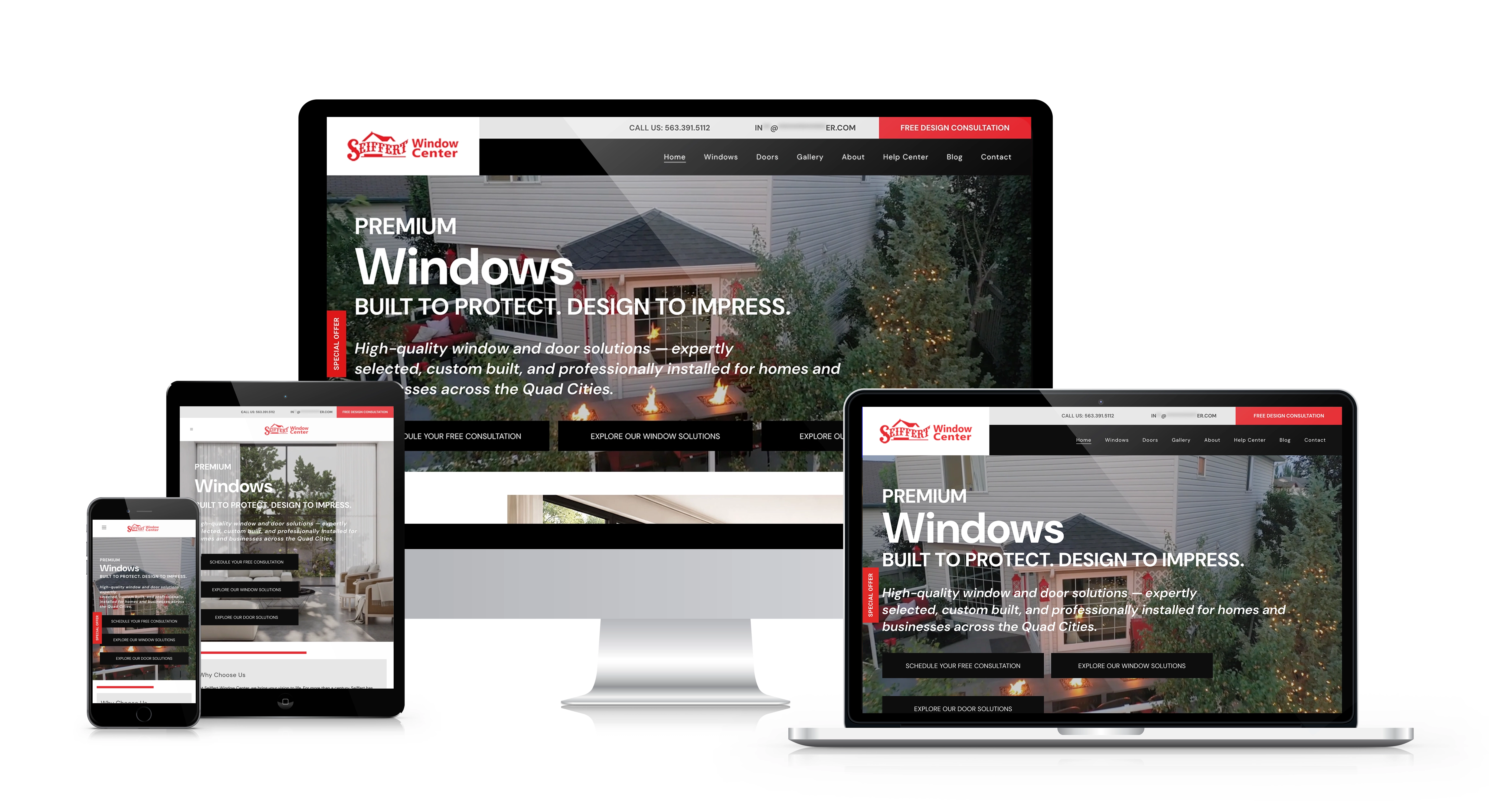
Your website needs to work well on smartphones, tablets, laptops, and desktop computers.
Responsive web design allows your website to adjust to different screen sizes. Visitors should be able to read your content, tap buttons, complete forms, and navigate your site without zooming or struggling.
Mobile usability is especially important for local businesses. Many people search for products and services from their phones while they are away from home or work.
When it comes to website design for small business, mobile performance should be considered from the beginning. Test your website on different devices and screen sizes, paying particular attention to menus, buttons, forms, images, and page speed.
4. Clear Calls to Action
Your website should guide visitors toward the next step.
A call to action tells visitors what you want them to do. Depending on your business, this might be:
- Request a Quote
- Schedule an Appointment
- Call Now
- Book a Consultation
- Get Started
- Shop Now
Place important CTAs where visitors naturally make decisions. This can include the homepage, service pages, testimonials, and contact page.
Avoid using too many competing CTAs. Choose one primary action for each page and make it easy to find.
5. Detailed Service Pages
Your homepage provides an overview, but your service pages should give visitors the details they need.
Create dedicated pages for major services when appropriate. Explain what you offer, who the service is for, what customers can expect, and why your business is qualified to help.
Strong service pages can also support your SEO strategy. They give search engines more context about your services and create opportunities to target relevant search terms.
Most importantly, write for your customers. Use straightforward language, answer the questions they are likely to have, and focus on the problems your business can solve.
6. Customer Reviews and Trust Signals
People want to know they can trust a business before spending money or reaching out.
Add genuine customer reviews, testimonials, case studies, certifications, awards, professional memberships, or examples of your work where appropriate.
Specific testimonials are especially helpful. Instead of simply saying that your company is “great,” strong customer feedback explains what you did, what the experience was like, and how it helped.
The right trust signals can make potential customers feel more comfortable taking the next step.
7. Fast Website Performance
A professional design means little if your website takes too long to load.
Large images, unnecessary scripts, excessive plugins, and poor hosting can all slow down your website. A slow website creates a frustrating user experience and may cause visitors to leave before they ever see what your business has to offer.
Optimize your images and remove features that do not add real value. Keep your website lightweight, efficient, and focused on the user.
Website speed should be part of your business website design process from the beginning, not something you worry about after launch.
8. Easy-to-Find Contact Information
Make it easy for customers to contact you.
Your website should clearly display relevant information such as:
- Phone number
- Email address
- Contact form
- Business address
- Hours
- Service areas
Your phone number or primary contact button can appear prominently in the header, while additional contact details can also be included in the footer and on your contact page.
Keep contact forms simple. Ask for the information you actually need. A long or complicated form can discourage potential customers from completing it.
9. Basic SEO Foundations
SEO helps potential customers find your business through search engines.
Your website should have clear page titles, useful meta descriptions, descriptive URLs, proper headings, internal links, optimized images, and helpful content.
You should also create content around the questions your customers ask and topics that are relevant to your products or services.
Avoid creating multiple pages that target the exact same keyword and search intent. Doing so can lead to keyword cannibalization, where pages on your own website compete with one another in search results.
SEO is most effective when it is considered as part of your website strategy rather than something added after the site has already been built.
10. A Website Designed for Conversion
Getting visitors to your website is only part of the goal. You also want those visitors to become leads or customers.
This is where website conversion matters.
A conversion could be a phone call, contact form submission, appointment, quote request, purchase, or email signup.
Every important page should have a clear purpose and make the next step easy for visitors. Clear messaging, strong calls to action, trust signals, simple forms, and intuitive navigation can all help reduce friction and improve your chances of turning website traffic into actual business.
Ready to Improve Your Small Business Website?
Your website should do more than look good. It should communicate your value, build trust, attract the right visitors, and turn those visitors into customers.
If your current website is outdated, difficult to use, or not generating enough leads, it may be time for a redesign.
Ready to build a website that works harder for your business? Contact RDC Design Group today to discuss your website goals and discover how a strategic, user-friendly website can help your business grow.
Small Business Website FAQ
What should a small business website include?
A small business website should include clear messaging, simple navigation, service information, contact details, calls to action, customer reviews, mobile-friendly design, fast performance, and basic SEO.
How many pages does a small business website need?
There is no fixed number. A simple business may only need a few core pages, while businesses with multiple services or locations may need more. Every page should serve a clear purpose.
Why is responsive web design important?
Responsive web design allows your website to adapt to different screen sizes. It makes your website easier to use on smartphones, tablets, laptops, and desktop computers.
How can a website increase conversions?
Improve your website conversion rate by making your offer clear, adding trust signals, using strong CTAs, improving mobile usability, and making it simple for visitors to contact or buy from you.
Does every small business need a blog?
Not necessarily. A blog can help answer customer questions, demonstrate your expertise, and attract relevant search traffic, but only if you can publish useful content that supports your business goals. Quality is more important than publishing content simply for the sake of having a blog.