
Website speed optimization is about more than shaving a few seconds off your load time. It involves improving how quickly a website loads and responds to visitors, creating a better user experience and making it easier for people to find information, explore your services, and take action.
Today, people expect websites to load quickly. If a page is slow or unresponsive, potential customers may leave before they have a chance to read your content, learn about your business, or contact you.
For this reason, speed should be an important part of your overall website strategy. Good website performance can improve usability, support conversions, and create a better experience across different devices.
What Is Website Speed Optimization?
Website speed optimization involves improving the technical parts of a website that affect loading time.
These improvements can include:
- Compressing large images
- Reducing unnecessary code
- Improving server response time
- Removing unused website files
- Optimizing fonts
- Improving mobile performance
- Using browser caching
- Reducing large scripts
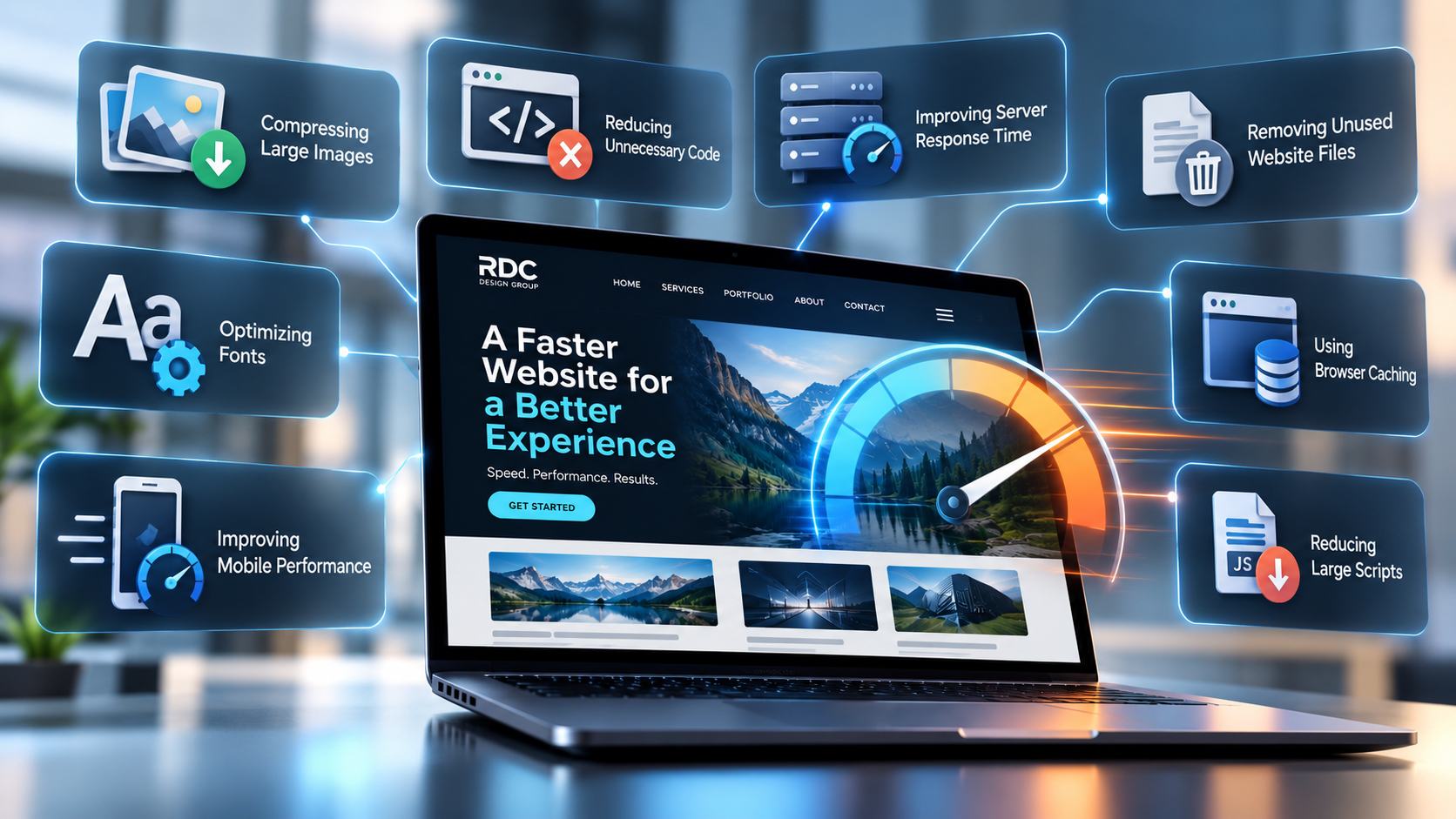
The goal is simple: your website should load quickly and respond smoothly when visitors interact with it.
However, speed is not only about making a page load faster. It is also about creating a smooth experience from the first click to the final action.
Why Website Speed Optimization Matters
A slow website can affect how visitors interact with your business.
For example, imagine a potential customer searching for a service. They click your website, but the page takes several seconds to load.
Instead of waiting, they may return to the search results and visit another website.
Improving speed can help reduce that frustration and keep potential customers engaged with your website.
Fast pages also make it easier for visitors to browse your services, read information, complete forms, and make purchases.
Website Speed Optimization and User Experience
User experience plays a major role in website success.
Visitors want pages to load quickly and respond when they click buttons, open menus, or scroll through content.
Good site speed optimization helps create a smoother experience.
This is especially important for mobile users. People often browse websites using phones with different connection speeds and screen sizes.
A website that works well on a desktop computer may still perform poorly on a mobile device.
That is why speed testing should include both desktop and mobile experiences.
How Page Speed Affects Your Website
Page speed refers to how quickly a web page loads and becomes usable.
Several factors can affect page speed.
Large images are a common problem. High-quality images are useful for design, but oversized files can slow down loading.
Plugins, scripts, animations, and third-party tools can also add extra loading time.
In addition, poor hosting or outdated website systems can affect performance.
A speed review can help identify which elements are creating delays.
Core Web Vitals Explained
Core Web Vitals are Google metrics that help assess important parts of the user experience, including loading performance, responsiveness, and visual stability.
The three Core Web Vitals are Largest Contentful Paint (LCP), Interaction to Next Paint (INP), and Cumulative Layout Shift (CLS).
These measurements can help website owners understand how visitors experience their pages.
For example, a page may appear to load quickly but still shift around as images or other elements appear.
That movement can make the page difficult to use.
Therefore, good optimization should look beyond basic loading time.
Website Optimization for Mobile Devices
Mobile optimization should be part of every speed strategy.
More visitors now use smartphones to search, browse, and contact businesses.
A mobile page needs to load quickly while also fitting smaller screens.
Images should be properly sized. Buttons should be easy to tap. Text should remain readable.
Elements, images, scripts, and functionality should also be optimized for smaller screens so they do not create unnecessary performance issues.
Good mobile website optimization can make your website easier to use and more effective.
Ways to Improve Website Speed
There are several practical ways to improve speed.
Optimize Images
Compress images before uploading them.
Modern image formats can also reduce file size while maintaining good visual quality.
Reduce Unnecessary Code
Remove code, scripts, and features that do not contribute to the user experience.
This can help reduce the amount of work a browser needs to perform.
Improve Caching
Caching allows certain website files to be stored so they do not need to load from scratch every time.
When configured correctly, caching can improve page speed for returning visitors.
Choose Reliable Hosting
Your hosting provider can affect website performance.
A reliable hosting setup can help your website respond faster and handle visitor traffic more effectively.
Minimize Redirects
Too many redirects can create additional loading steps.
Review unnecessary redirects and remove them when possible.
Website Speed Optimization and SEO
Website speed is also relevant to search performance.
Search engines aim to provide users with useful and accessible results. Page experience can be one part of the overall picture.
However, speed is not the only SEO factor.
Quality content, useful information, relevant keywords, technical SEO, mobile usability, and strong site structure also matter.
Therefore, website speed optimization should be part of a wider SEO strategy.
How to Test Website Performance
Before making changes, test your website using a performance tool such as Google PageSpeed Insights.
A speed test can show information about loading time, Core Web Vitals, and other performance issues that may need attention.
After making improvements, test the website again.
This before-and-after approach helps you understand whether your changes produced meaningful results.
Also, test important pages rather than looking at only your homepage.
Service pages, product pages, contact pages, and landing pages can all have different performance issues.
Signs Your Website Needs Optimization
Your website may benefit from speed improvements if:
- Pages take several seconds to load
- Images appear slowly
- Visitors complain about slow pages
- Mobile pages feel difficult to use
- Buttons respond slowly
- Pages shift while loading
- Your site contains many large files
- Performance has declined after adding new features
If several of these issues apply, a technical speed review may be worthwhile.
Final Thoughts
Website speed optimization is an important part of building a modern, user-friendly website.
A faster website can make it easier for visitors to find information, interact with your pages, and contact your business.
Start by checking your images, code, hosting, scripts, caching, and mobile experience. Then, measure your results after making improvements.
Remember that speed is only one part of a successful website. Strong content, clear navigation, mobile design, accessibility, and a useful user experience are also important.
Want a Faster, Better-Performing Website?
If your website feels slow or visitors are leaving before taking action, it may be time for a performance review.
Contact RDC Design Group to discuss your website speed optimization needs and how we can create a faster, smoother website experience for your visitors.
FAQs About Website Speed Optimization
What is website speed optimization?
Website speed optimization improves the loading and response time of a website. It can involve images, code, hosting, caching, scripts, and other technical elements.
Why is website speed important?
A faster website can improve user experience and make it easier for visitors to browse, read, and take action.
How can I improve page speed?
Start by optimizing images, reducing unnecessary code, reviewing plugins and scripts, improving caching, and checking your hosting setup.
Does website speed affect SEO?
Speed can contribute to page experience and technical website quality. However, SEO also depends on content, relevance, site structure, links, and many other factors.
What are Core Web Vitals?
Core Web Vitals are measurements used to assess key parts of a web page experience, including loading, interaction, and visual stability.
Does mobile speed matter?
Yes. Mobile users may have different connection speeds and device limits. A fast, mobile-friendly website can provide a better experience.