
Expand Search Visibility Into the Markets That Matter Most.
If your business serves multiple cities, counties, regions, or territories, your website needs a strategy for competing beyond your immediate location.
RDC develops geographic SEO strategies designed to build meaningful visibility across priority markets without relying on thin, repetitive location pages.
What Is Geographic SEO?
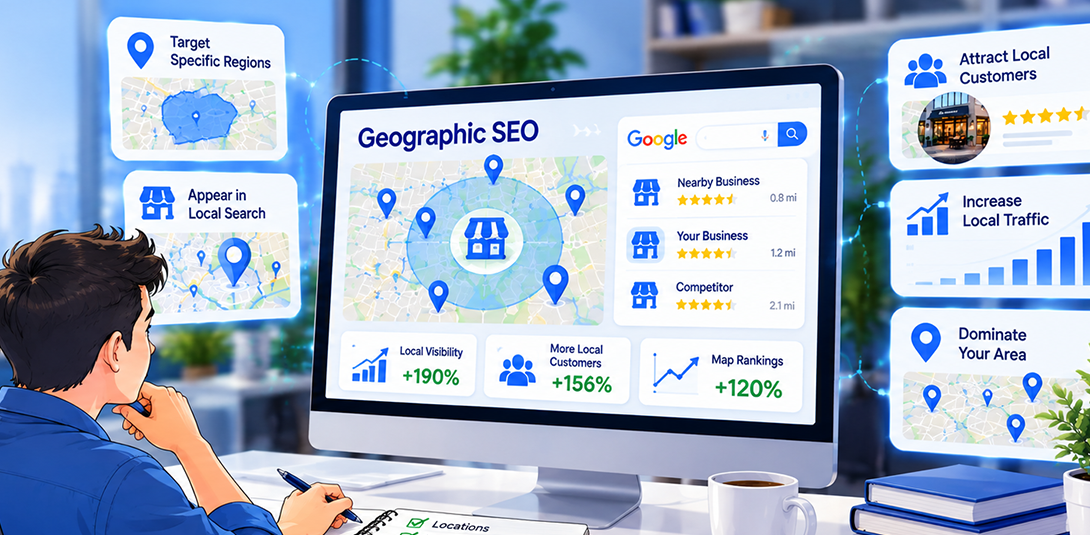
Geographic SEO uses strategically planned website content and local relevance signals to improve visibility for searches tied to specific cities, regions, service areas, and markets.
It is especially valuable for service-area businesses, multi-location organizations, B2B companies covering large territories, and businesses actively expanding into new markets.
More Than Swapping City Names
A weak geographic strategy creates dozens of nearly identical pages and changes only the city name. That approach provides little value to users and can create a low-quality search footprint.
RDC focuses on creating useful geographic pages with meaningful context around the services, customers, industries, needs, and opportunities relevant to each target market.
Geographic Opportunity Research
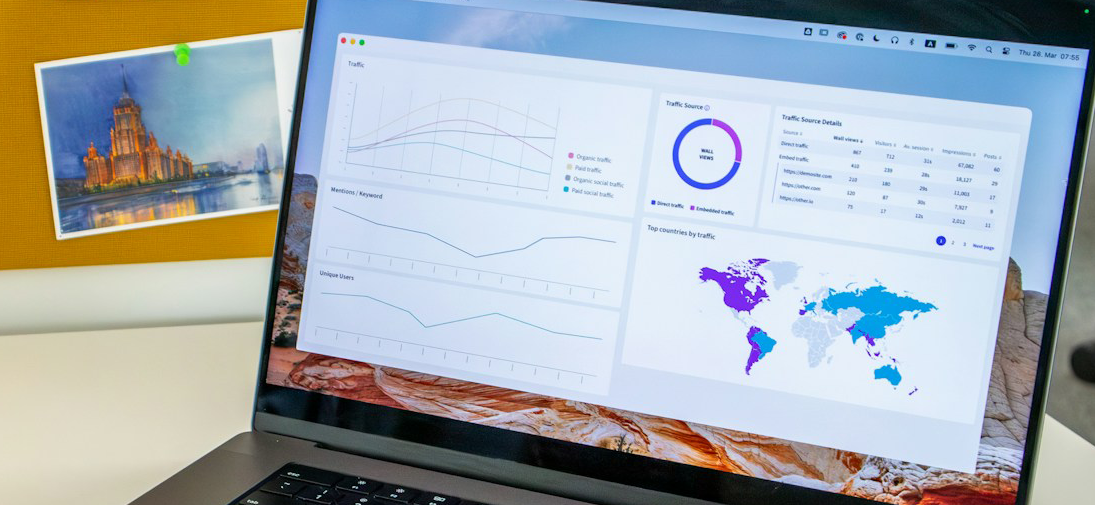
We evaluate search demand, competition, current rankings, service coverage, business priorities, and market opportunities to determine which locations warrant dedicated content and how those pages should fit into the larger website architecture.
Geographic Content Strategy
Depending on the business, geographic content may include:
01
City and service-area pages
02
Regional landing pages
03
Service + location combinations
04
Technical SEO monitoring and recommendations
05
New SEO and AEO content
06
Multi-location content
07
Market-specific industry or audience content
08
Supporting articles and resources
09
Location-focused FAQs and answers
Scalable Website Architecture

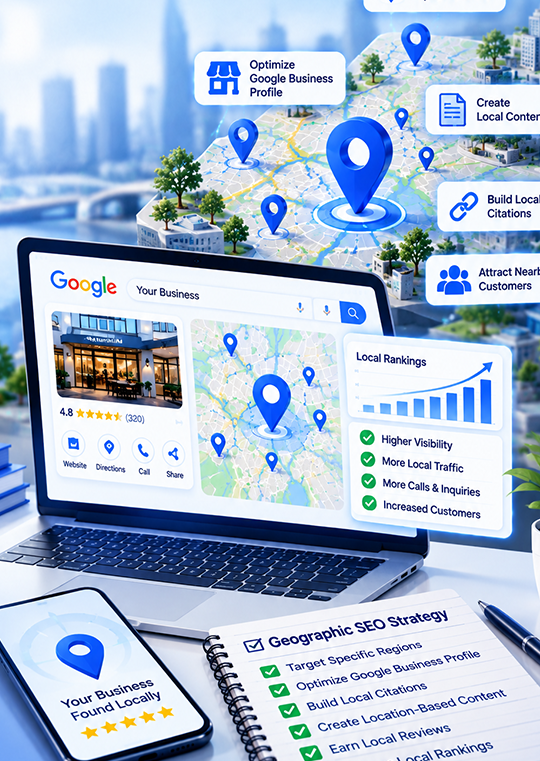
As geographic footprints grow, organization becomes critical. RDC plans page hierarchy, URLs, navigation, internal linking, and relationships between core services and geographic pages so expansion remains useful to customers and understandable to search engines.
Geographic SEO + Local SEO
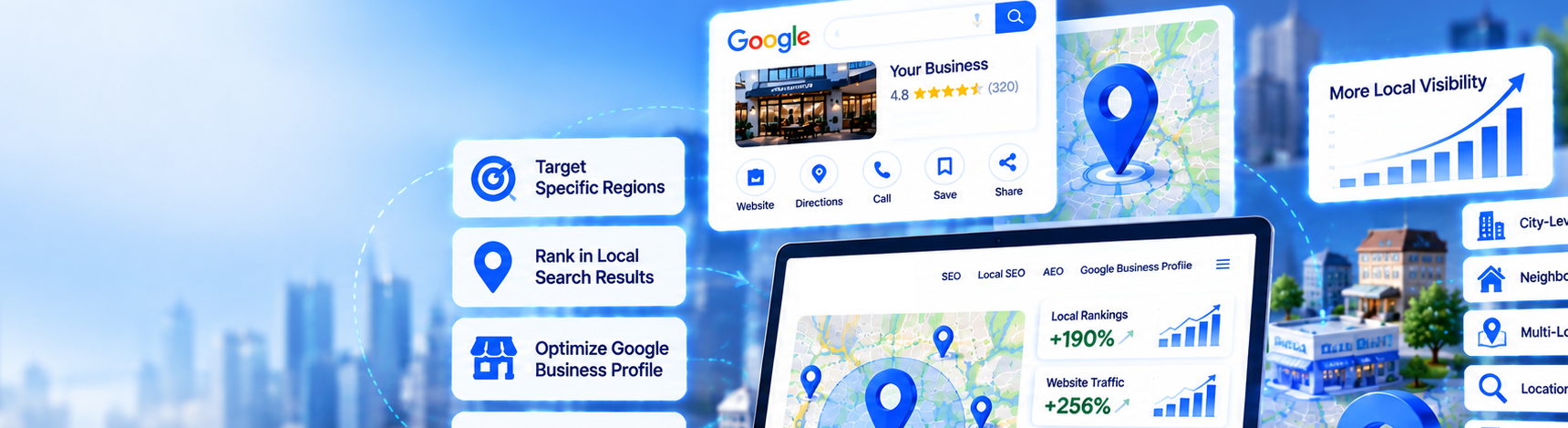
Geographic website content works alongside Google Business Profile optimization, citations, reviews, and other local signals.
Geographic SEO + AEO

Clear service-area information and market-specific expertise can also help AI-powered platforms understand where your business operates and which customers it is equipped to serve. Geographic expansion is therefore considered within RDC’s larger SEO + AEO strategy.
Who Benefits From Geographic SEO?

Geographic SEO is useful whenever location affects how customers search, even if the company is not a traditional storefront. Contractors may serve several counties, manufacturers may target distributors across multiple states, professional firms may work throughout a region, and national companies may have priority markets where they want stronger visibility.
The strategy should reflect how the business actually sells and serves customers. RDC identifies the locations that have real commercial value and builds the search architecture around those priorities instead of generating location pages simply to make the website larger.
Choosing the Right Markets
Not every city or region deserves a dedicated page. RDC considers search demand, competition, existing rankings, customer concentration, service capabilities, expansion goals, and the likelihood that useful market-specific content can be created.
This prioritization is important because geographic SEO can scale quickly. Starting with the strongest opportunities allows the website to build a logical foundation before expanding into additional markets. Performance data can then help determine where the next layer of growth should occur.

What Makes a Strong Geographic Page?

A useful geographic page should help a visitor understand what the company offers in that market and why the business is relevant to the search. Depending on the company, that can include service information, industries served, regional considerations, project experience, delivery or coverage information, local proof, related resources, and answers to location-specific questions.
Not every page needs every element, and content should never invent local experience that does not exist. The objective is to create a legitimate resource for that market while clearly connecting the page to the company’s core services and expertise.
Avoiding Thin & Duplicate Location Content
Scaling location pages by copying the same text and changing a place name may be fast, but it produces a weak experience for users and a low-value search footprint. It can also make it difficult for search engines to understand which pages are meaningfully different.
RDC plans geographic content so pages have a distinct reason to exist. Templates and shared structural elements can still be useful, but the substance of each page should reflect the target market, relevant services, and actual business context.

Connecting Geographic Pages to the Larger Website
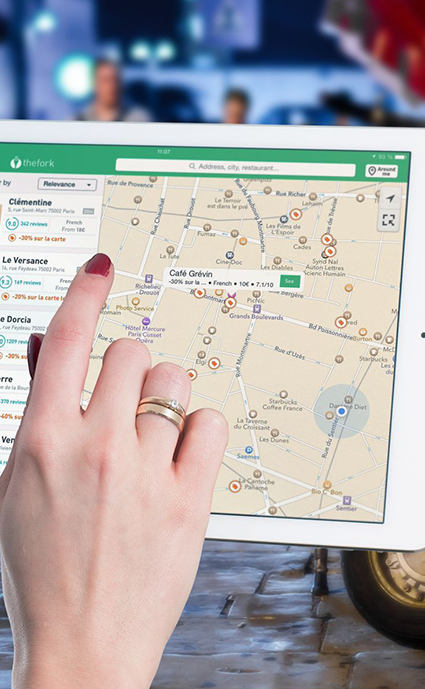
Geographic pages should not live in isolation. They need to connect naturally with core service pages, local profiles, relevant articles, regional resources, and other pages that help users move through the website. Strategic internal linking also helps search engines understand how markets and services relate.
For larger geographic programs, RDC plans URL structure, hierarchy, navigation, and expansion paths before dozens of pages are created. That makes the strategy easier to manage and gives future content a clear place within the site.
Geographic SEO can also support broader sales and marketing priorities. If a company is opening a new territory, expanding a service area, recruiting dealers, or investing in a particular region, search content can be developed around the same priorities. Coordinating the website with real business expansion creates stronger, more credible pages than building location content in isolation. RDC uses the geographic roadmap as a living strategy, allowing priority markets to change as the business grows and performance data reveals where additional opportunity exists.
Get My Free SEO/AEO Audit
Let’s build a smarter SEO + AEO strategy designed to increase visibility, attract qualified traffic, generate leads, and create long-term growth. Whether you want to improve traditional Google rankings, strengthen local visibility, expand into new geographic markets, or build a stronger presence across AI-powered search, RDC can develop a strategy around your goals and budget.
Frequently Asked Questions
01.
What is geographic SEO?
Geographic SEO is a strategy for improving search visibility in specific cities, regions, service areas, or markets through useful location-focused content, website structure, internal linking, and supporting local relevance signals.
02.
How is geographic SEO different from local SEO?
Local SEO often focuses heavily on Google Maps, Google Business Profiles, citations, reviews, and proximity-based searches. Geographic SEO focuses more broadly on building website visibility across selected markets. The two strategies often work together.
03.
Should we create a page for every city we serve?
Not necessarily. Dedicated pages make the most sense where there is a real search and business opportunity and where useful, distinct content can be created. RDC prioritizes markets rather than automatically producing a page for every location.
04.
Can geographic SEO work for a national company?
Yes. A national company may still have priority states, regions, metro areas, or industry markets where dedicated content can improve relevance and create additional search entry points.
05.
Will location pages be duplicate content?
They should not be. RDC’s approach is to create pages with meaningful market-specific context rather than copying the same content and swapping city names.
06.
Does geographic SEO help AEO? Clear information about where a company operates, which services it provides in those markets, and the customers it serves can help AI-powered systems better understand geographic relevance as part of the broader SEO + AEO strategy.
What Working With RDC Looks Like
RDC begins by understanding your business, website, audience, competitive landscape, priority services, and growth goals. From there, we identify the highest-value opportunities within this area of the SEO + AEO strategy and prioritize work based on potential impact rather than applying the same checklist to every company.
01
The strategy is reviewed as performance data develops. That allows the campaign to respond to new opportunities, changing search behavior, competitor activity, website updates, and the areas producing the strongest business results.
02
Our goal is to build a search presence that becomes more useful and more valuable over time.
03