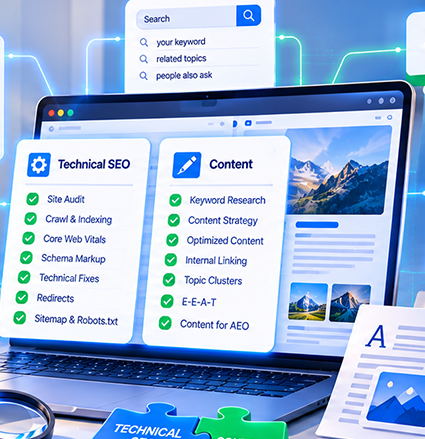
Help Search Engines Crawl, Understand, and Index Your Website
Great content cannot perform at its best if search engines struggle to access or understand your website. RDC’s technical SEO work identifies and resolves issues that can limit crawling, indexing, performance, usability, and search visibility.
Technical SEO is a core component of our integrated SEO + AEO strategy.
What Is Technical SEO?

Technical SEO focuses on the behind-the-scenes structure and performance of your website. The objective is to make important content accessible, understandable, efficient to crawl, and properly represented in search engines.
Technical work also supports AEO by creating a cleaner, more structured environment for machines to interpret your content and business information.
Why Technical SEO Matters
Search engines need to be able to find, crawl, render, and understand your pages before those pages have an opportunity to perform in search results.
Technical problems can quietly limit an otherwise strong SEO strategy. Important pages may not be indexed correctly, duplicate URLs can create confusion, slow page performance can hurt the user experience, broken internal links can make content harder to discover, and poor website architecture can make it difficult for search engines to understand which pages and topics matter most.
RDC looks beyond individual technical errors to understand how the website functions as a whole. The goal is to remove barriers that can hold back search visibility while creating a stronger foundation for content, authority building, local SEO, geographic expansion, and AEO.
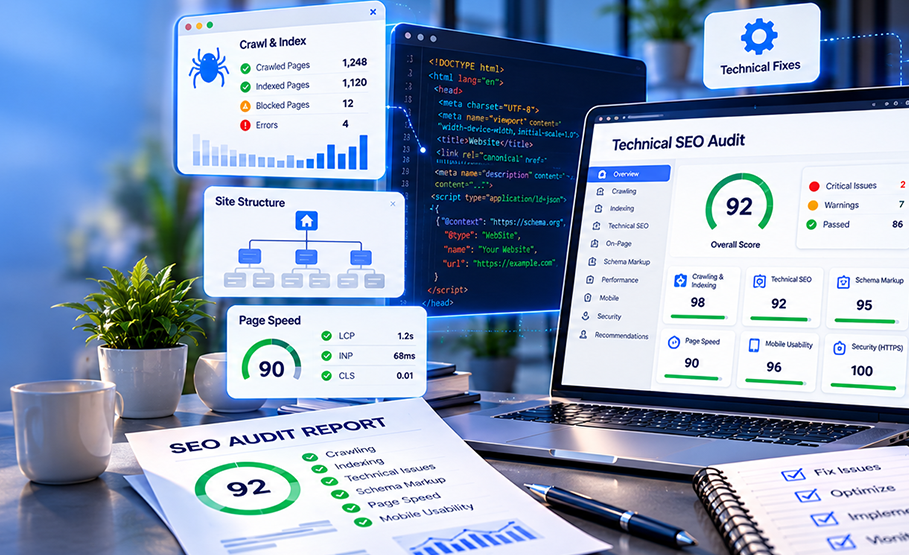
Technical SEO Audits
RDC can perform a comprehensive technical review to identify search visibility problems and opportunities. Findings are prioritized based on potential impact rather than handed over as an overwhelming list of automated warnings.
A technical audit can also establish a baseline for the website, helping us identify which issues should be addressed first and which items can be monitored as the broader SEO + AEO strategy develops.

Core Technical SEO Areas
CRAWLING & INDEXING
Review whether important pages can be discovered and indexed while preventing low-value or unintended content from creating unnecessary crawl issues.

SITE ARCHITECTURE
Evaluate navigation, URL structure, page hierarchy, internal linking, and the relationships between important content.

XML SITEMAPS
Review and optimize XML sitemaps so search engines can efficiently discover important website content.

ROBOTS & INDEXATION DIRECTIVES
Evaluate robots.txt, meta robots directives, and other controls that influence crawling and indexing.

CANONICALIZATION & DUPLICATE CONTENT
Identify duplicate or competing URLs and establish clear signals around preferred pages.

REDIRECTS & BROKEN LINKS
Identify broken links, redirect chains, outdated URLs, and migration issues that can hurt users and search visibility.

PAGE PERFORMANCE & CORE WEB VITALS
Identify performance issues that can negatively affect user experience and organic search performance.

MOBILE USABILITY
Ensure important website experiences and content work effectively across mobile devices.

STRUCTURED DATA
Implement appropriate structured data when it can provide search engines with useful context about website content.

SEARCH CONSOLE & TECHNICAL MONITORING
Use search performance and indexing data to identify issues, validate improvements, and monitor website health over time.

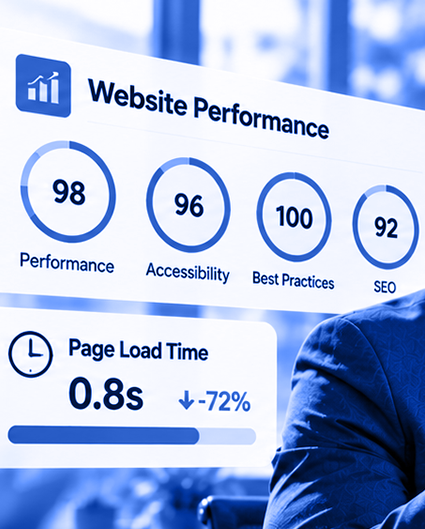
Website Speed, Performance & Core Web Vitals

Website performance is both a technical and user-experience consideration. Slow-loading pages, layout shifts, delayed interactions, oversized assets, unnecessary scripts, and other performance issues can make a website frustrating to use and can limit the effectiveness of the traffic your SEO campaign generates.
RDC can evaluate technical performance and identify opportunities to improve how efficiently important pages load and function. Depending on the website, that may involve reviewing images, scripts, plugins, caching, hosting, code, third-party resources, or other elements contributing to poor performance.
Because RDC also specializes in website design and development, we can look at these issues from both an SEO and development perspective rather than treating website performance as an isolated score.
Technical SEO for Website Redesigns & Migrations
A website redesign or migration can create significant SEO problems if search considerations are addressed only after the new site launches.
Changes to URLs, navigation, content, page hierarchy, internal links, domains, platforms, or website structure can affect pages that have already earned rankings, backlinks, and search history.
RDC can incorporate technical SEO into the planning and launch process by reviewing existing URLs and search performance, establishing redirects where necessary, preserving valuable content and metadata, updating internal links and sitemaps, and monitoring indexing after launch.
Our website development and SEO teams can work together throughout the process, helping reduce the disconnect that often occurs when a website is rebuilt by one team and handed to an SEO company afterward.

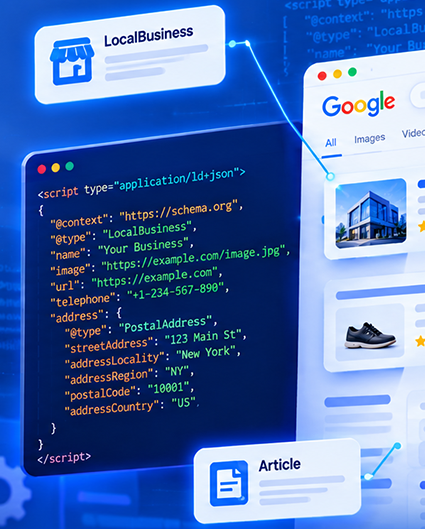
Structured Data & Schema Markup

Structured data can provide search engines and other systems with additional context about certain types of website information. Depending on the business and content, appropriate schema markup may help clarify information about the organization, services, products, locations, FAQs, articles, breadcrumbs, and other supported elements.
Schema is not a shortcut to rankings or AI visibility, and adding markup does not guarantee enhanced search results. It works best when it accurately represents information that already exists on the website.
RDC evaluates structured data as part of the larger technical and AEO strategy, implementing relevant markup where it can help machines more clearly interpret the content and entities represented on the site.
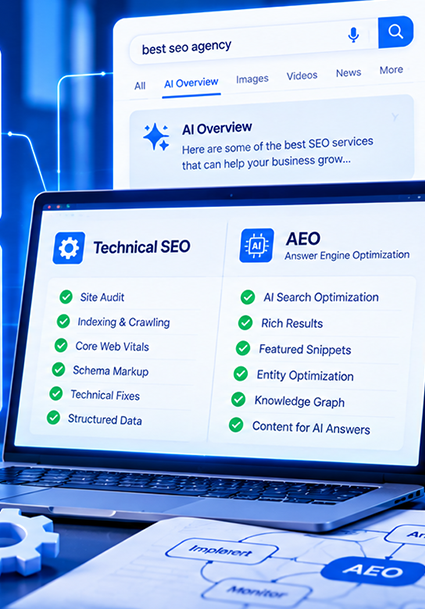
Technical SEO Supports AEO
Answer Engine Optimization still depends on machines being able to access, interpret, and connect the information on your website.
A technically sound website creates a stronger environment for both traditional search engines and AI-powered systems. Clear page relationships, logical website architecture, accessible content, structured information, consistent business signals, and appropriate schema can all contribute to a website that is easier for machines to understand.
Technical SEO alone will not create AI visibility, but it helps establish the foundation that strong AEO content and authority can build upon.

Technical SEO Is Ongoing

Websites change. Plugins update. New pages launch. Old URLs disappear. Search engines change how they crawl and evaluate websites.
RDC continues monitoring technical health throughout the campaign so problems can be identified before they become long-term visibility issues.
Ongoing monitoring can also reveal new opportunities as the website grows. New content may need stronger internal linking, geographic expansion can change website architecture, redesigns can introduce new technical considerations, and Search Console data may uncover indexing or performance issues that were not present earlier in the campaign.
Technical SEO is therefore not just an initial audit. It remains part of the ongoing SEO + AEO strategy.
Technical SEO + Content
Technical improvements establish the foundation, but they work best alongside strong content and authority. Once search engines can efficiently access and understand your website, RDC can continually expand the valuable content and signals that help it compete.

Get My Free SEO/AEO Audit
Let’s build a smarter SEO + AEO strategy designed to increase visibility, attract qualified traffic, generate leads, and create long-term growth. Whether you want to improve traditional Google rankings, strengthen local visibility, expand into new geographic markets, or build a stronger presence across AI-powered search, RDC can develop a strategy around your goals and budget.
Frequently Asked Questions
01.
What is included in a technical SEO audit?
A technical SEO audit can evaluate crawling and indexing, website architecture, XML sitemaps, robots directives, canonicalization, duplicate content, redirects, broken links, mobile usability, page performance, structured data, internal linking, Search Console data, and other technical issues that may affect search visibility.
02.
How do I know if my website has technical SEO problems?
Some technical problems are obvious, such as broken pages or a slow website, while others can exist without being visible to the average visitor. Indexing issues, duplicate URLs, incorrect canonical tags, redirect problems, poor internal linking, or crawl restrictions may require technical analysis and Search Console data to identify.
03.
Does website speed affect SEO?
Website performance contributes to the overall user experience and can be part of how search engines evaluate pages. Improving speed can also make the website easier and more enjoyable for visitors to use, which is important regardless of its direct impact on rankings.
04.
Is schema markup important for SEO and AEO?
Structured data can provide machines with additional context about certain information on a website and can support a clearer understanding of pages, businesses, products, services, and other supported entities. However, schema is only one component of SEO and AEO and does not guarantee rankings, rich results, AI citations, or recommendations.
05.
Do I need technical SEO during a website redesign or migration?
Technical SEO should be considered before, during, and after a redesign or migration. Changes to URLs, content, architecture, internal links, domains, or platforms can affect existing organic visibility. Planning redirects, preserving valuable content and search signals, and monitoring the new website after launch can help reduce unnecessary losses.
06.
Is technical SEO a one-time project?
Usually not. An initial technical audit can identify existing issues, but websites continually change. New pages, plugins, development updates, redesigns, content changes, and search-engine changes can introduce new technical considerations. RDC monitors technical health as part of an ongoing SEO + AEO strategy.
What Working With RDC Looks Like
RDC begins by understanding your website, business goals, existing search presence, platform, technical environment, and the broader SEO + AEO strategy. From there, we identify the technical issues and opportunities most likely to affect search visibility and prioritize them based on potential impact.
01
Because our team works across SEO, website design, and development, we can evaluate technical recommendations in the context of how the website actually functions. That allows us to consider search visibility, performance, usability, content, and conversion together rather than treating technical SEO as a disconnected checklist.
02
As the website and campaign evolve, we continue monitoring technical health and adjusting priorities based on performance data, website changes, new content, and emerging search opportunities.
03