RELIABILITY. DEDICATION. CREATIVITY.

Let’s Chat!

RDC DESIGN GROUP — 3D Product Rendering Services A Complete Guide to 3D Product Rendering, Photorealistic Imagery, CGI Workflow, Pricing, and FAQs

What Is 3D Product Rendering?

3D product rendering is the process of creating photorealistic images of a product using computer-generated imagery (CGI). Instead of relying on photography, designers model the product digitally, apply materials and lighting, and render high-resolution visuals that look as real — or better — than a studio photo.

For product companies, 3D rendering is now essential for:

  • Marketing & advertising
  • Amazon/eCommerce product listings
  • Packaging
  • Pitching to investors
  • Pre-manufacturing visualization
  • Instructional & training materials
  • Website and social media content

Why Brands Choose RDC Design Group for 3D Product Rendering

3D product rendering is the process of creating photorealistic images of a product using computer-generated imagery (CGI). Instead of relying on photography, designers model the product digitally, apply materials and lighting, and render high-resolution visuals that look as real — or better — than a studio photo.

  • Hyper-realistic materials (plastics, glass, metals, fabrics, etc.)
  • Accurate modeling to exact specs & dimensions
    Custom lighting that elevates brand aesthetics
  • Unlimited-to-scale consistency across entire product lines
  • Faster turnaround than traditional photography
  • Significant cost savings for product variations, colorways, and angles
  • Animation + interactive elements available
  • No need for prototypes or physical samples

Benefits of 3D Product Rendering

Perfect Images — Every Time

No manufacturing defects. No dust. No scratches. No retouching needed.

Create Infinite Product Variations

Colorways, materials, finishes, backgrounds, exploded views, cutaways — all from one model.

Save Thousands Compared to Photography

No shipping costs, no studio rental, no re-shoots.

Launch Faster

Marketing doesn’t have to wait for the product to be manufactured. Rendering enables pre-launch campaigns.

Consistency Across All Channels

Perfect lighting, angles, and branding across your entire product line.

Industries That Benefit From 3D Rendering
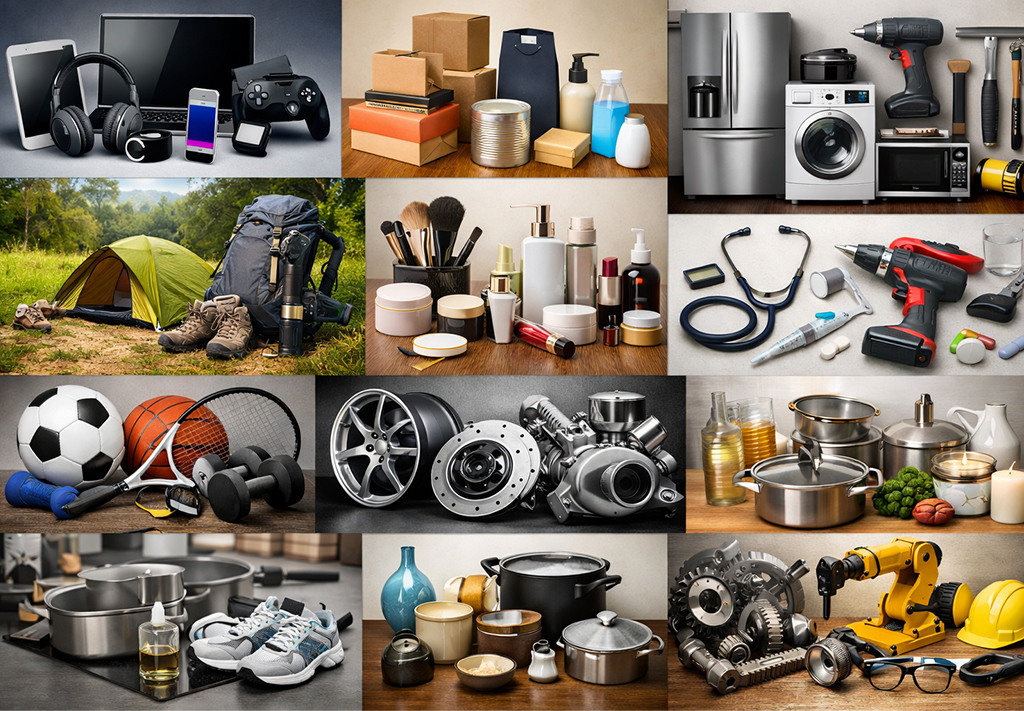
RDC provides photorealistic rendering for:

  • Consumer electronics
  • Food Packaging
  • Appliances
  • Tools
  • Outdoor gear
  • Beauty & skincare
  • Medical & healthcare
  • Sporting goods
  • Automotive components
  • Housewares
  • Industrial equipment

Furniture & interiors If it can be manufactured — it can be rendered.

rdcFaq-img-2

Our 3D Product Rendering Process A clean, predictable, professional workflow:

1. Discovery + Asset Collection

We gather:

  • CAD files, sketches, or reference photos
  • Dimensions
  • Material specifications
  • Finish samples
  • Branding + color profiles

2. 3D Modeling

We create an accurate digital model, matching the real-world dimensions and features.

3. Texturing & Material Creation

We build custom materials: brushed metal, ABS plastic, soft-touch rubber, chrome, fabric weave, anodized aluminum, glass, etc.

4. Lighting & Environment Setup

Lighting is everything. We match:

  • Studio photography styles
  • Lifestyle environments
  • Colored branding backdrops
  • Dramatic cinematic lighting

5. Rendering & Post-Production

High-resolution, photorealistic rendering of all requested angles, plus optional retouching for marketing polish.

6. Delivery

You receive:

  • High-res JPG or PNG
  • Social media canvas formatted if requested
  • Layered PSD separating product, shadow, and background for increased use flexibility
  • 2500×2500 standard resultion, with ultra-high resolution availabe upon request (4k, 6k, 8k, etc)

Types of 3D Product Renders We Provide

Photorealistic Studio Renders

Clean lighting, crisp detail — ideal for eCommerce.

Lifestyle Renders

Your product placed in photoreal scenes (kitchens, offices, outdoor environments, etc.)

Exploded Views

Breakdown visuals showing how a product is constructed.

Cutaway Views

Interior component views.

Colorway & Material Variants

Perfect for brands with large SKU counts.

Amazon Product Imagery

Optimized for Amazon’s technical and marketing standards.

Motion & Animation

360° turntables, part animations, interactive UI elements, etc.

3D Rendering Pricing: What to Expect

rdcFaq-img-5

Pricing depends on:

  •  Complexity of the model
  • Number of components
  • Material complexity
  • Number of final rendered images
  • Environment type (studio vs. lifestyle)
  • Need for animation or interactive elements

Typical range:

  • Simple product: $750 – $1,000
  • Medium complexity: $1,000–$1,500
  • High complexity or custom scenes: $1,500–$4,000
  • Animations: $3,000–$12,000+ depending on length and complexity

3D Product Rendering vs. Photography

Feature

  • Requires physical samples
  • Cost per added variation
  • Retouching needed
  • Perfect consistency
  • Modify angles/backgrounds
  • Pre-manufacture visuals

3D Rendering

  • No
  • Very low
  • Rare
  • Yes
  • Easy
  • Yes

Photography

  • Yes
  • Very high
  • Almost always
  • Hard to achieve
  • Requires reshoot
  • No

3D Product Rendering FAQ

Workflow & Process

What is 3D product rendering?

3D product rendering is the creation of photorealistic digital images of a product using advanced computer-generated imagery (CGI) instead of traditional photography. This process allows companies to showcase products with perfect lighting, textures, and perspectives long before manufacturing. Renderings can highlight details, materials, and finishes that may be difficult to capture with photography, making them ideal for marketing, eCommerce, packaging, and investor presentations. By simulating real-world lighting and materials, 3D renders provide highly convincing visuals that can replace or complement studio photos.

How does the 3D rendering process work?

The 3D rendering process begins with gathering all necessary assets such as CAD files, product sketches, reference photos, dimensions, and material specifications. Next, a precise digital model is created that matches the product’s real-world dimensions and features. Materials and textures are applied to replicate plastics, metals, glass, fabrics, or other finishes accurately. The next step is lighting and camera setup, where studio, natural, or custom-branded environments are simulated. Finally, the rendering engine produces high-resolution images, which may be refined with post-processing for color accuracy and marketing polish. The result is photorealistic imagery ready for print, web, or interactive use.

Do you need CAD files to start a project?

While CAD files are ideal for accuracy and speed, they are not strictly required. Our team can work from reference photos, sketches, physical products, or even rough measurements. The most important factor is having sufficient detail to create a realistic digital model. This flexibility allows us to handle a wide range of client needs, from fully engineered products to conceptual prototypes.

How long does a typical rendering project take?

Most projects are completed within 5–10 business days, depending on the complexity of the product, number of angles or views, and the type of render required (studio, lifestyle, animation, or interactive). Projects with simpler products and fewer variations can be completed faster, while complex assemblies, multiple material finishes, or full lifestyle scenes may require additional time. Rush timelines are also available for clients needing fast turnaround.

Can you render products that haven’t been manufactured yet?

Absolutely. 3D product rendering is perfect for pre-production visualization. Brands frequently use renders to launch marketing campaigns, pitch investors, test consumer response, or create packaging and promotional materials before manufacturing. As long as we have accurate specifications and references, we can produce realistic, photoreal images of products that exist only in concept or design files.

What’s the difference between a studio render and a lifestyle render?

Studio renders feature clean, minimal backgrounds and focus on showing product details clearly. They are ideal for eCommerce, catalogs, and marketplaces like Amazon or Shopify. Lifestyle renders, on the other hand, place the product in realistic or branded environments such as a kitchen, gym, office, or outdoor setting. These images help customers visualize how a product will look and function in real life and are often used in advertising and social media campaigns.

Pricing & Cost

How much does a 3D render cost?

Pricing depends on product complexity, number of views, material types, and whether the render requires animation or interactive features. Simple products typically range from $750 – $1,000, medium-complexity products from $1,000 – $1,500, and high-complexity or custom scenes from $1,500 – $4,000. Animations or interactive models are quoted separately, starting around $3,000–$12,000+ depending on length and complexity.

Do you offer bulk or package pricing?

Yes, we offer discounted pricing for projects with multiple products, images, angles, and product variations needed. Brands with entire product lines or recurring rendering needs can benefit from package pricing that reduces cost per image and streamlines the workflow. Bulk packages also include options for multiple colorways, finishes, and both studio and lifestyle scenes.

Is 3D rendering cheaper than traditional photography?

Often, yes. Traditional photography requires physical products, studio rentals, lighting setups, and a professional photography crew. Multiple variations and revisions can be costly. With 3D rendering, you avoid these expenses, and creating new colorways, finishes, or angles is significantly cheaper since it only requires digital adjustments rather than reshoots. For pre-production products or large SKU lines, rendering can result in substantial cost savings.

Are revisions included in the price?

Most packages include a set number of revisions, typically focused on material, color, lighting, and camera adjustments. Additional changes beyond the included revisions are available at a small additional cost. Our goal is to ensure that all renders meet client expectations while providing flexibility to make adjustments.

Technical Details & Deliverables

What file formats do you provide?

As a standard we provide high-resolution images in JPG and PNG along with a layered PSD file, and other formats depending on client needs. Transparent-background files and web-optimized versions are also available. For interactive or animation projects, we can deliver WebGL-ready files, 4K/8K renders, and file formats compatible with most design and CAD software.

Can you match exact brand colors?

Yes. We can match Pantone, RAL, HEX, RGB, and CMYK color codes to ensure consistency with brand guidelines. Accurate color reproduction is critical for marketing materials, packaging, and digital assets.

Do you provide 3D files or just images?

We can provide either or both. Alongside rendered images, clients can request 3D models in formats such as FBX, OBJ, STEP, STL, USDZ, or GLB, ready for internal design, interactive applications, AR experiences, or further customization. Delivering 3D assets ensures flexibility for a range of applications beyond static images.

Can you create exploded or cutaway views?

Yes. Exploded and cutaway views are commonly requested to demonstrate assembly, internal components, or product construction. These visuals are highly effective for instruction manuals, marketing campaigns, or technical documentation, allowing viewers to understand the product’s functionality in detail.

Can you render transparent or reflective materials like glass or chrome?

Absolutely. We specialize in creating realistic renders of materials such as glass, polished metal, chrome, glossy plastics, rubber, and fabric. Our physically-based rendering workflow ensures that reflections, refractions, and highlights behave as they would in real life, producing convincing and professional visuals.

Animation & Interactive Options

Do you offer product animations?

Yes, we offer animations such as 360° turntables, exploded sequences, functional demonstrations, and cinematic motion graphics. Animations are ideal for product launches, marketing campaigns, trade shows, and online demonstrations, providing a dynamic way to showcase your product.

Can you create interactive 3D models for websites?

Yes. We can produce interactive 3D models suitable for WebGL, GLB/GLTF, or USDZ, allowing users to rotate, zoom, and interact with products on your website or eCommerce platform. These models can be integrated into Shopify, WordPress, or custom web applications for enhanced user engagement.

Are animations included in standard pricing?

No, animations are quoted separately due to the additional modeling, motion setup, and rendering time required. However, we provide bundled packages for clients who require both still images and animated content for their marketing needs.

Can you show product functionality in motion?

Yes. We can animate functional components such as hinges, lids, buttons, switches, telescoping parts, and internal mechanisms. This capability allows brands to demonstrate how a product works in a visually engaging and easy-to-understand format, which is ideal for instruction, marketing, and investor presentations.

Use Cases & Applications

Can 3D rendering be used for eCommerce?

Absolutely. We create images optimized for Amazon, Shopify, and other eCommerce platforms that meet marketplace standards for resolution, background, and angle. Photorealistic renders help increase conversion rates and reduce product returns by providing accurate visuals to customers.

Can I use 3D renders for marketing campaigns?

Yes. Rendered images and animations can be used across social media, online advertising, print campaigns, packaging, trade shows, and product launches. Lifestyle renders, branded scenes, and interactive visualizations help products stand out and communicate quality effectively.

Can you render multiple product variations?

Yes. Once a base 3D model is created, we can produce multiple variations of color, material, finishes, labels, and branding at minimal cost. This allows clients to visualize large product lines, seasonal collections, or customized versions without additional physical production.

Are lifestyle renders possible?

Yes. We can create fully photorealistic lifestyle environments that showcase products in realistic or branded settings. Whether it’s a kitchen, office, gym, or outdoor space, lifestyle renders provide context and help customers envision the product in real-world use.

Accuracy & Realism

How realistic are the renders?

Our renders are highly photorealistic, simulating real-world materials, lighting, and reflections. Attention to detail ensures that textures, finishes, shadows, and highlights match physical products. In many cases, the renders are indistinguishable from professional studio photography.

Are product dimensions accurate?

Yes. Every product is modeled to exact specifications using CAD files, engineering drawings, or measured references. This ensures that rendered visuals are true to scale and suitable for technical documentation, packaging, and marketing.

Can you simulate different lighting conditions?

Yes. We can replicate studio lighting, natural daylight, indoor lighting, and branded or custom lighting setups. Lighting can be fully controlled to create the desired mood, highlight specific product features, and enhance photorealism.

Can shadows and reflections be controlled?

Absolutely. Shadows and reflections are carefully managed to achieve realism or highlight product features. We can adjust the intensity, direction, and softness of shadows, as well as reflections for reflective surfaces like metals, glass, or polished plastics.

Do you use real-world materials?

Yes. Every material is recreated digitally using physically-based rendering techniques. Properties such as roughness, specularity, transparency, metallic behavior, and subsurface scattering are applied to simulate real-world appearances, making products appear lifelike and visually accurate.